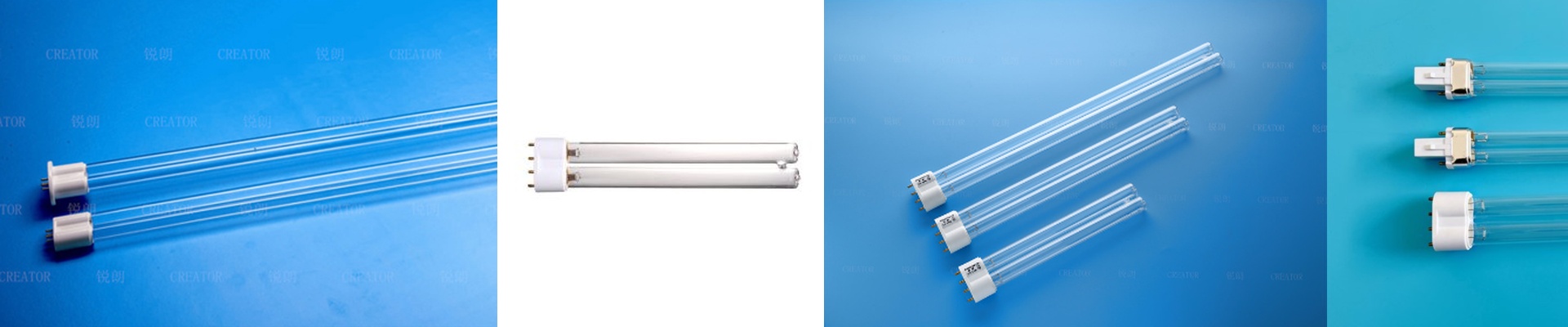
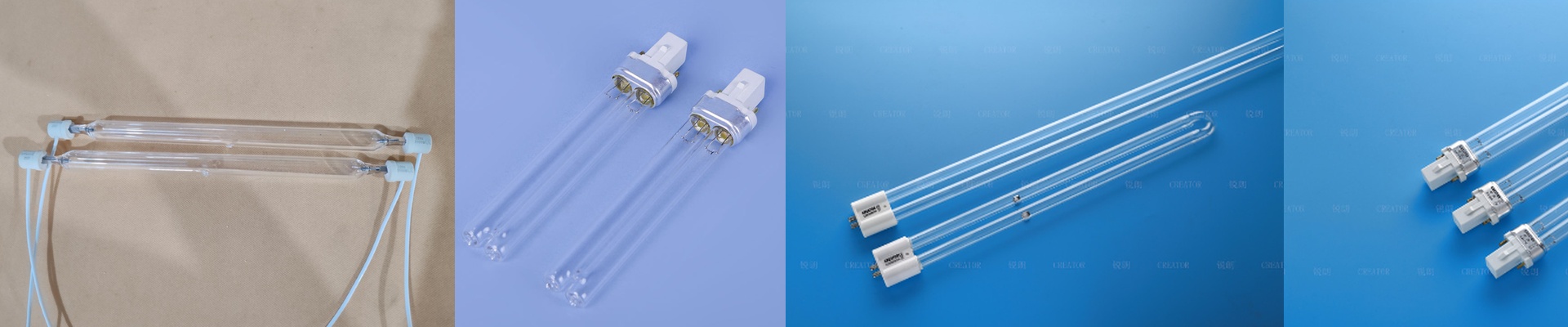
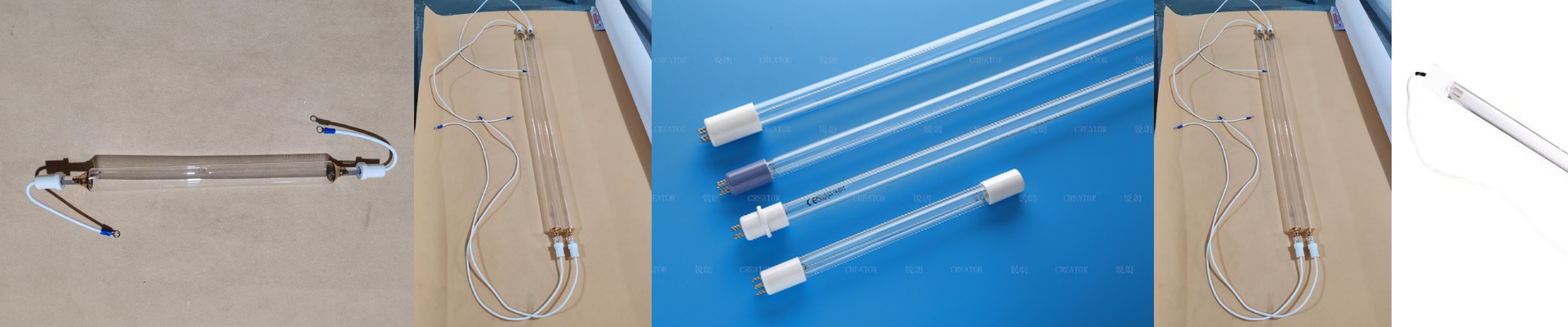
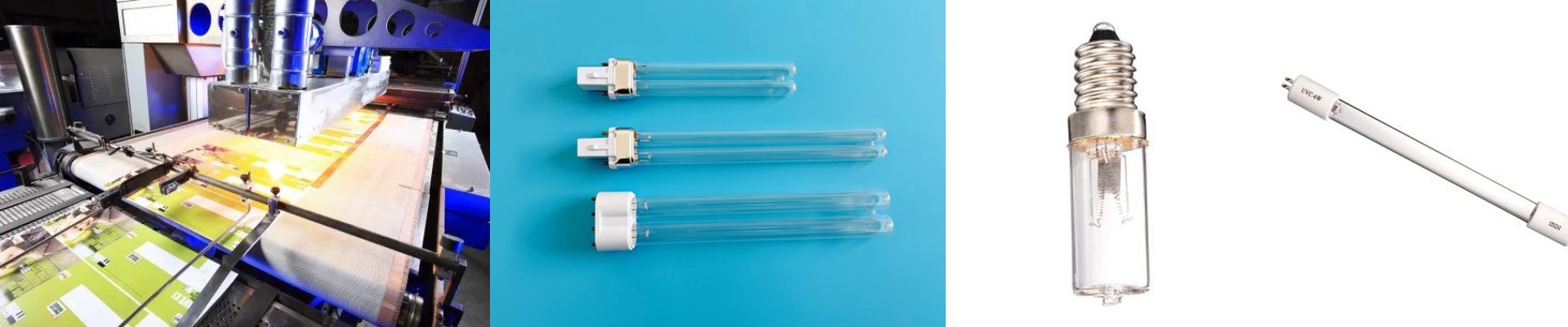
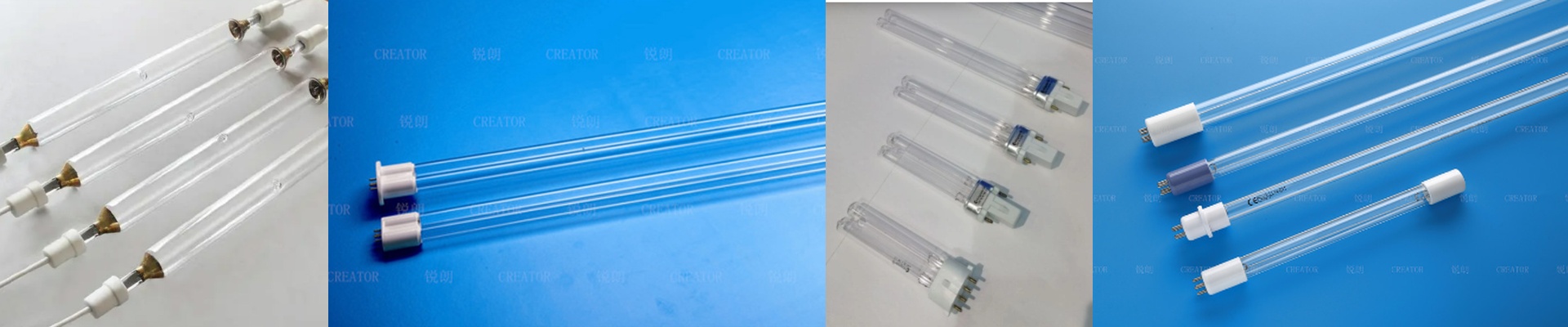
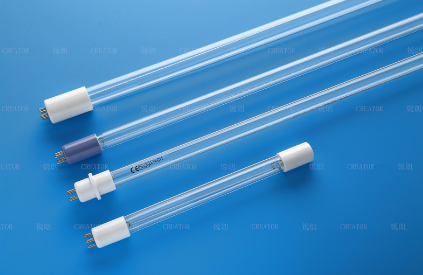
When foreign-brand spares get stuck in a month-long air-freight queue, your coating line doesn’t just pause—it idles. Rolls stack up, schedules slip, and you’re left staring at a bottleneck you can’t control. We build custom mercury UV lamps for paper coating and get them to you in 7 days. Specs are matched to your coater, right down to geometry and electrical interface, and we back it with immediate configuration support and rapid prototyping.
What matters on the line
Paper coating curing is photochemical, not thermal. The mercury vapor discharge gives you a broad UV band that drives photoinitiator decomposition and resin cross-linking. For most paper coatings and overprint varnishes, the sweet spot is the 365 nm line, with usable energy across 300–400 nm. We build mercury UV lamps for coating lines with:
- Spectral output: A strong 365 nm line plus broadband UVA/UVB continuum for a balanced surface and depth cure.
- Peak irradiance: Measured at the substrate plane, typically 800–1,200 mW/cm², depending on arc length, power density, and reflector design.
- Cure energy density: Delivers 500–1,500 mJ/cm² in typical coater dwell windows, adjustable by lamp power and line speed.
- Arc length and width: Standard lengths from 150 mm to 1,800 mm; custom widths to match your coater beam profile without wasting energy on the edges.
- Power and electrical: Configured for 100–240 V single-phase or 380–480 V three-phase, with connectors that match your lamp housing and igniter.
- Reflector optics: Elliptical or parabolic reflectors with high-reflectivity dichroic coatings, tuned for UV reflection above 300 nm and minimal IR heating of the web.
- Cooling: Forced-air or water-cooled jackets sized to hold quartz envelope temperature steady—no hot spots, consistent output.
- Ozone management: Ozone-free or low-ozone quartz options to protect operators and keep ventilation load reasonable in tight coater enclosures.
- Lamp life and stability: Rated 2,000–3,000 hours at 80% of initial output under controlled junction temperature; track decay with a spectral radiometer, not by eye. The numbers are practical. If your coating chemistry needs a minimum energy threshold to fully cross-link, coming up short at the substrate plane leaves residual tack, weak scratch resistance, and blocking on the reel. Overdoing it wastes energy, ages the lamp faster, and can yellow the substrate. The lamp has to deliver repeatable irradiance across the full coat width, shift after shift.
Why this fits when time is the constraint
Waiting 30 days for a foreign-brand spare isn’t an option. We cut that to 7 days by keeping standard quartz blanks, reflector subassemblies, and electrical terminations on the shelf, then customizing arc length, envelope geometry, and mounting to your coater. Speed doesn’t change the physics. We match your line speed and coating thickness by selecting lamp power and reflector profile so the energy density at the web lands where it needs to be. For example:
- A 1,200 mm arc lamp at 120 W/cm, paired with an elliptical reflector, can hit ~1,000 mW/cm² peak at the substrate.
- At 100 m/min line speed and about 100 mm exposure width, the dose comes in around 600 mJ/cm²—enough for many UV topcoats.
- If your chemistry is pigmented or running thicker, we adjust power density or line speed, not the cure itself. You get three practical gains:
- Uptime protection: A spare on the shelf removes the single-point failure that shuts your coater down.
- Energy and thermal control: Reflector efficiency and IR filtering reduce wasted heat, easing cooling load and helping keep paper moisture content stable.
- Consistent quality: Stable spectral output and uniform irradiance cut curl, blocking, and under-cure defects. Compatibility is built in. The lamp fits standard housings, uses the same igniters and power leads, and drops into the same mounting envelope. No re-engineering. Swap, align, run.
What you need to get it right
Fast delivery still depends on accurate inputs. Give us the coater model, existing lamp part number, arc length, power rating, and connector type. Add substrate width, line speed range, and target cure energy. If you’ve got a spectral radiometer trace or an irradiance map across the web, send it over—we’ll replicate the beam profile and match the output. One constraint is real: mercury UV lamps are sensitive to operating temperature and ignition cycles. Output stability hinges on controlled quartz temperature and consistent airflow or water cooling. Running outside the rated voltage window or with undersized cooling shortens lamp life and shifts spectral balance. Plan a 15-minute warm-up to reach stable output, and use a shutter or interlock to avoid repeated hot restarts. Installation notes:
- Align the lamp to the reflector’s focal line. A 1–2 mm offset can drop peak irradiance by 10–20%.
- Use ozone-free quartz in confined spaces to reduce ventilation demands, and make sure exhaust ducting is sized for the housing.
- Keep the lamp envelope clean—coating deposits scatter UV and cut output. Inspect every 500 hours. If you run 24/7, keep a second lamp pre-configured. Swap when the active lamp hits 80% of initial output. That prevents gradual quality drift and keeps energy density in spec all week. When the alternative is a month of waiting, a 7-day custom mercury UV lamp for paper coating keeps your coater moving, your energy density on target, and your output consistent. We build to your coater’s geometry, your chemistry’s spectral needs, and your schedule.